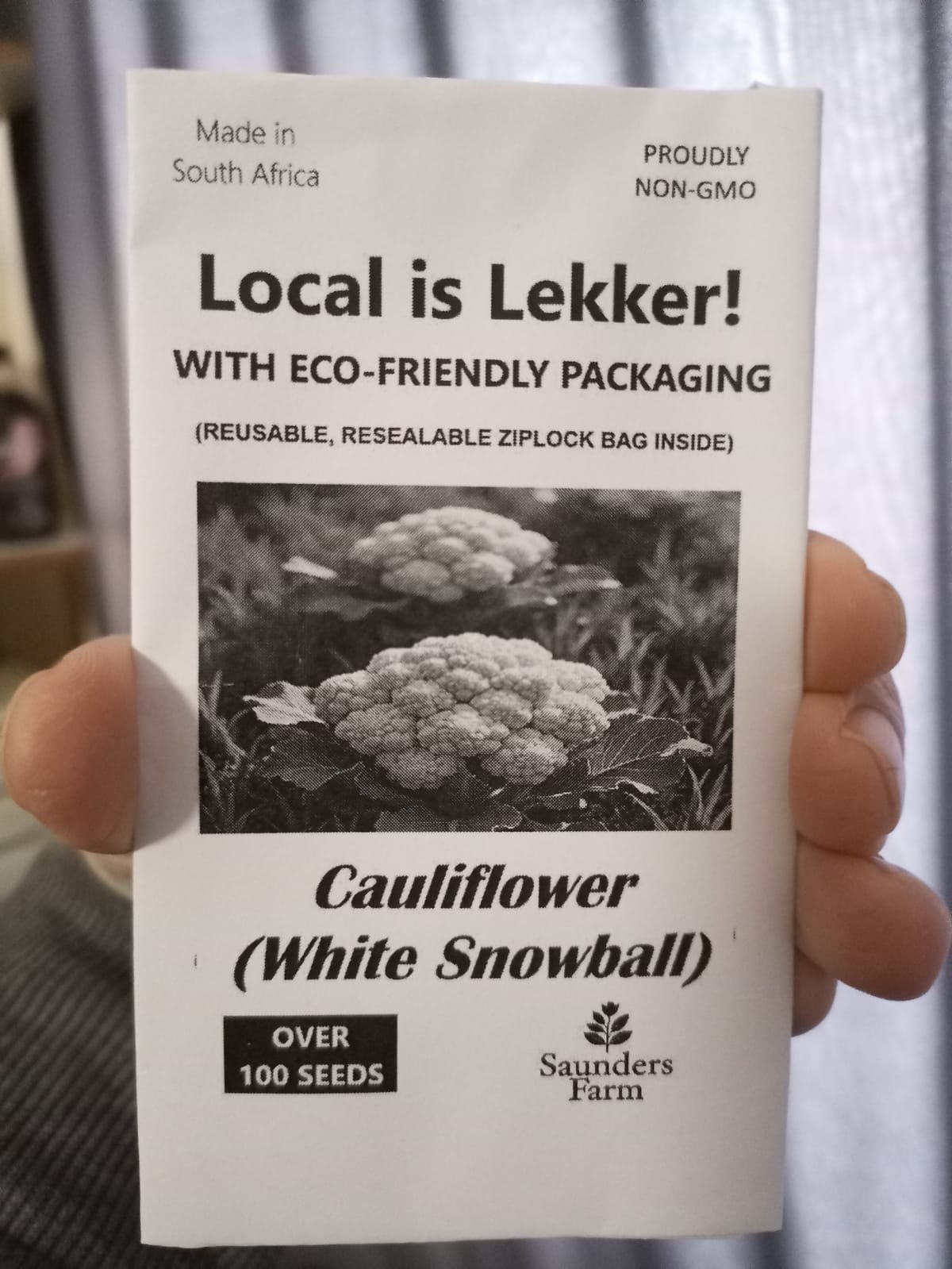
,

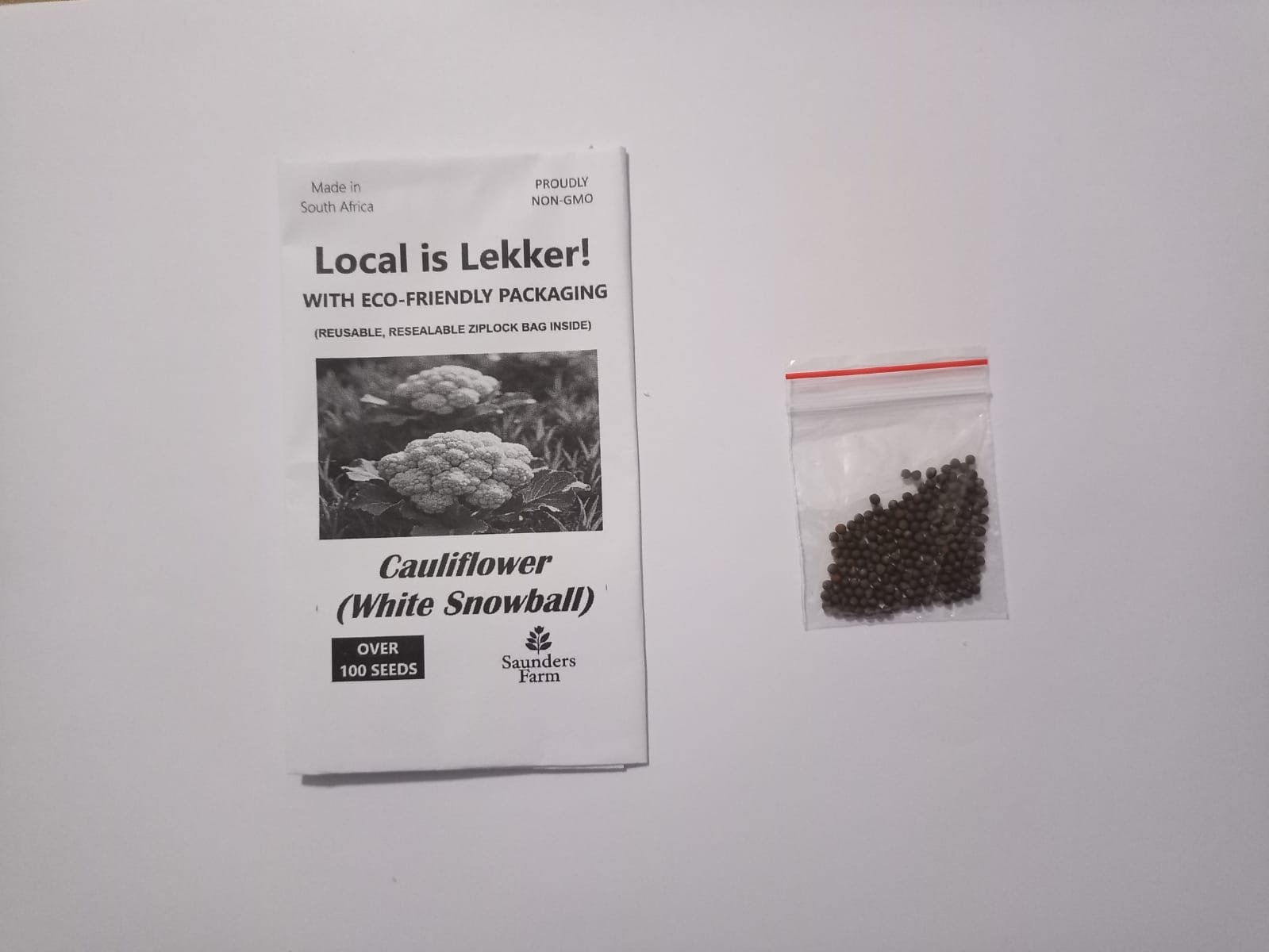
Cauliflower – Over 100 Seeds

R15.00

Excluding shipping
  • Over 100 Cauliflower (White Snowball) Seeds
  • Join our WhatsApp Group to see when this product goes on special: https://chat.whatsapp.com/Ly1HQgXpYGXL2ffDGXUl4G
  • Proudly non-GMO
  • ECO-FRIENDLY: Biodegradable packaging with resealable, reusable plastic Ziplock bag inside
  • Made in South Africa, for South Africa
  • Comment below to sign up for new product alerts

Availability: 39 in stock

Guaranteed Safe Checkout

Cauliflower (White Snowball) Seeds

Grow your own crisp, snow-white cauliflower heads with our premium White Snowball seeds.

This classic heirloom variety is a favorite among South African gardeners for its reliability, excellent flavor, and uniform growth.

Why Choose White Snowball Cauliflower?

  1. Heirloom Quality: Pure, non-GMO seeds passed down through generations for superior taste.
  2. Excellent Yields: Produces compact, heavy heads shielded by dense outer leaves.
  3. Abundant Pack: Every packet contains over 100 seeds to maximize your garden patch.
  4. Adaptable Winner: Thrives in cool South African autumn, winter, and early spring climates.

South African Planting & Growing Guide

  • Best Planting Time: Sow from January to April in most SA regions (late summer to autumn).
  • Sowing Depth: Plant seeds 6mm deep in seed trays or directly into fertile, well-draining soil.
  • Spacing: Space seedlings 45cm to 60cm apart to allow maximum head development.
  • Sunlight: Requires full sun for at least 6 hours daily.
  • Watering: Keep soil consistently moist but never waterlogged to prevent buttoning.
  • Harvest: Ready to pick in 90 to 110 days when heads are firm and compact.
logo simple

Stop Killing Your Seeds!

5 Germination Mistakes Gardeners Must Stop Immediately

Get this free guide (5 minute read) and The Printable Monthly Growing Guide for South Africa (also free), via email:

We don’t spam! Read our privacy policy for more info.

Reviews

There are no reviews yet.

Be the first to review “Cauliflower – Over 100 Seeds”

Your email address will not be published. Required fields are marked *

How to Grow Cauliflower from Seed

How to Grow White Snowball Cauliflower from Seed: The Complete South African Guide

Growing cauliflower from seed is a rewarding project for South African vegetable gardeners. White Snowball is a reliable, fast-maturing heirloom variety perfectly suited to our local climate.

Follow this step-by-step guide to achieve large, crisp, snow-white heads.

1. When to Plant Cauliflower in South Africa

Cauliflower is a cool-season crop. If it grows during the scorching summer heat, the heads will split or taste bitter.

Highveld & Inland: Sow from January to March for a late autumn and winter crop.

Coastal Regions: Sow from February to April when the coastal humidity drops.

Frost-Free Areas: Sow into May for a winter-long harvest.

2. Sowing the Seeds (Step-by-Step)

You can sow White Snowball seeds directly into the ground, but starting them in seed trays gives you better control over pests and moisture.

Fill the Trays: Use a high-quality seed starting mix or fine coco peat.

Sow the Seeds: Plant seeds 6mm deep. Drop 2 seeds per cell to ensure success. Every packet contains over 100 seeds, so you will have plenty of chances to grow.

Moisten: Water gently with a spray bottle so you do not wash the seeds away.

Germination: Keep the soil damp. Sprouts will appear within 5 to 10 days.

3. Transplanting Seedlings

Your seedlings are ready for the garden bed when they are about 10cm to 15cm tall and have 4 to 5 true leaves. This usually takes 4 to 6 weeks.

Soil Preparation: Mix plenty of well-rotted compost and organic fertilizer into the soil. Cauliflower needs rich, fertile soil with a pH between 6.0 and 7.0.

Spacing: Space plants 45cm to 60cm apart in rows that are 60cm apart. Packing them too close together results in small heads.

Depth: Plant them slightly deeper than they sat in the seed tray to give the stems extra support.

4. Ongoing Care and Maintenance

Sunlight: Ensure the bed receives at least 6 hours of direct sunlight daily.

Watering: Water deeply and evenly. Dry soil causes cauliflower to “button” (produce tiny, useless heads). Mulch around the plants to retain soil moisture.

Feeding: Cauliflower is a heavy feeder. Apply a nitrogen-rich liquid organic fertilizer every 2 to 3 weeks.

5. Blanching for Snow-White Heads

White Snowball is semi-self-blanching, meaning the outer leaves naturally wrap upward to protect the head.

However, to get that pristine, bright white color, you should help it along:

When the central head is the size of a golf ball, gently pull the large outer leaves up and over it.Secure the leaves with a soft piece of twine or a rubber band.

This blocks out the sun, keeping the curd white, tender, and sweet.

6. Harvesting Your Reward

Your White Snowball cauliflower will be ready to harvest roughly 90 to 110 days after transplanting.

Look for heads that are 15cm to 20cm in diameter, compact, firm, and smooth.

Cut the main stem with a sharp knife, leaving a few outer leaves attached to protect the head from bruising.

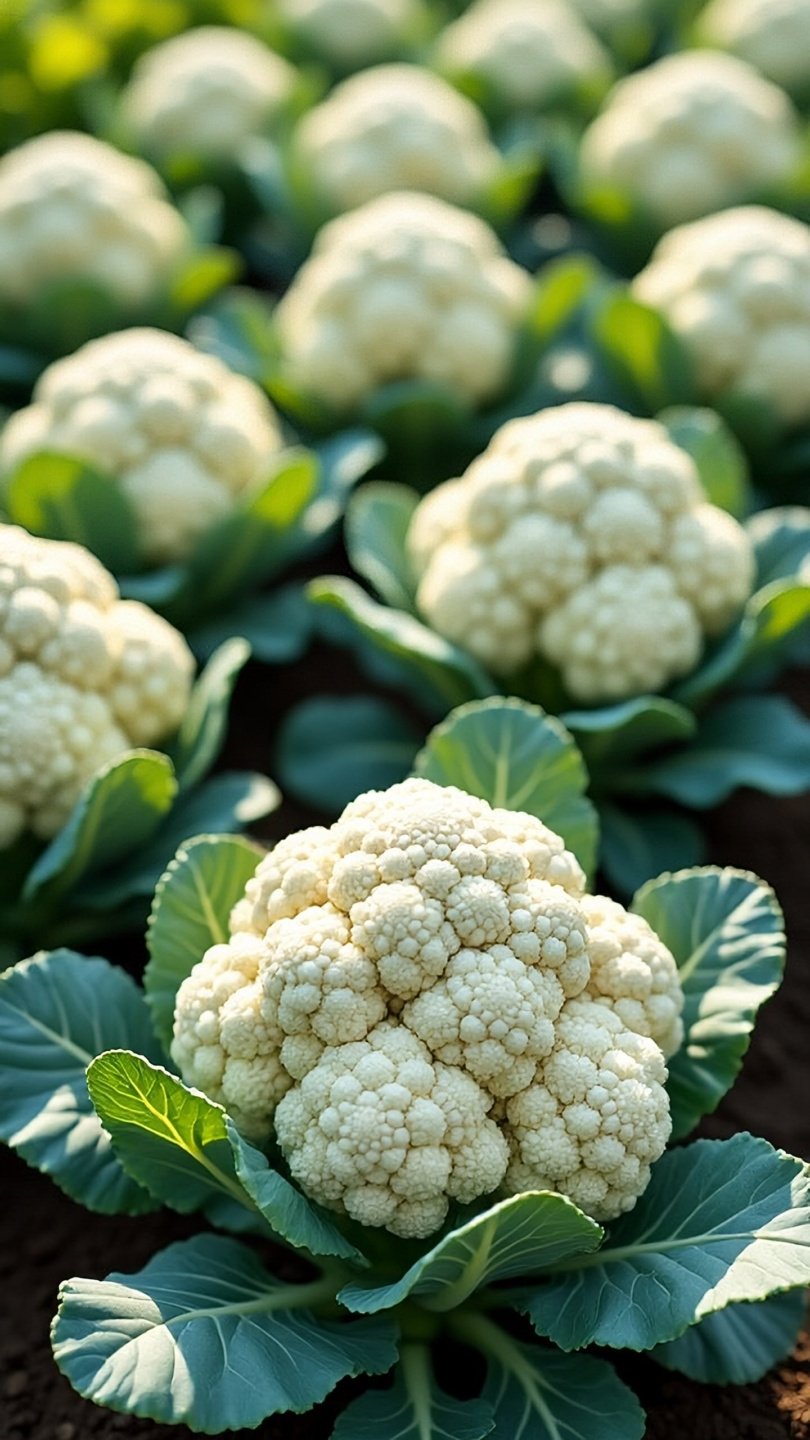
Cauliflower Medicinal / Nutritional Uses

Cauliflower Nutritional Value and Medicinal Benefits: A Scientist’s Guide

Adding homegrown White Snowball cauliflower to your diet offers far more than a delicious side dish.

This cruciferous superfood is packed with essential vitamins, minerals, and bioactive plant compounds that actively support human health.

Nutritional Profile (Per 100g Raw Cauliflower)

According to data from the USDA FoodData Central, 100 grams of raw cauliflower is highly nutrient-dense while remaining exceptionally low in calories:

  • Calories: 25 kcal
  • Carbohydrates: 5.3g
  • Dietary Fibre: 2.1g (supports gut microbiomes)
  • Protein: 2.0g
  • Vitamin C: 51.6mg (over 50% of your Daily Value)
  • Vitamin K: 16.6mcg (critical for bone health)
  • Folate (B9): 61mcg (essential for cellular repair and pregnancy support)
  • Potassium: 320mg (helps regulate blood pressure)

Key Medicinal & Health Benefits

1. Rich in Cancer-Fighting Compounds

Cauliflower contains high amounts of glucosinolates and isothiocyanates. When you chop or chew raw cauliflower, these compounds convert into sulforaphane.

Clinical studies suggest that sulforaphane acts as a potent antioxidant, helping to inhibit enzymes involved in tumour growth and slowing down the progression of cancer cells.

2. Enhances Brain Function and Nervous System Support

Cauliflower is one of the premier plant-based sources of choline. Choline is an essential nutrient that many individuals do not consume enough of.

It plays a foundational role in:

  1. Maintaining the integrity of cell membranes. Producing neurotransmitters required for memory, mood regulation, and muscle control.
  2. Protecting against age-related cognitive decline and supporting liver health by preventing cholesterol accumulation.

3. Promotes Cardiovascular and Arterial Health

The combined power of dietary fibre and sulforaphane directly benefits heart health. Fibre binds to cholesterol in the digestive tract, aiding its removal from the body.

Concurrently, sulforaphane helps reduce systemic inflammation and high blood pressure, keeping your arteries clear of dangerous fatty build-up.

4. Optimises Digestion and Gut Microflora

With 2 grams of fibre per cup, cauliflower acts as a natural prebiotic. It feeds the beneficial bacteria living in your gut.

A healthy gut microbiome reduces localized inflammation and protects against common chronic conditions such as constipation, diverticulitis, and inflammatory bowel disease (IBD).

5. Strengthens Immune Defenses and Collagen Production

A single serving of White Snowball cauliflower delivers more than half of your daily requirement of Vitamin C.

This vital antioxidant stimulates white blood cell production to fight off seasonal pathogens, assists your body in absorbing iron from plant foods, and synthesises collagen to accelerate wound healing.

Maximize the Nutrients: Raw vs. Cooked

To get the absolute most medicinal value out of your harvest, pay attention to how you prepare it:

Raw: Retains the absolute highest concentrations of Vitamin C and active sulforaphane.

Steamed: Light steaming breaks down tough plant fibres, making the vegetable easier to digest while preserving the vast majority of its powerful antioxidants.

Avoid Boiling: Submerging cauliflower in boiling water causes water-soluble vitamins (like Vitamin C and B-complex vitamins) to leach out into the water and go to waste.

Cauliflower Growing Guide

The Ultimate Cauliflower Growing Guide: From Seed to Harvest

Growing your own cauliflower is incredibly rewarding. This guide covers everything you need to grow huge, crisp, snow-white heads in South Africa.

Quick Growing Facts

  • Difficulty: Moderate
  • Sunlight Required: Full sun (6+ hours daily)
  • Germination Time: 5 to 10 days
  • Time to Harvest: 90 to 110 days from transplanting

1. Planting Windows for South African Regions

Cauliflower is a cool-season crop. It must mature during cool weather, or the heads will split.

Inland & Highveld: Sow from January to March for a late autumn crop.

Coastal Regions: Sow from February to April as temperatures drop.

Frost-Free Areas: Sow through May for winter-long production.

2. Sowing White Snowball Seeds

Starting seeds in trays gives you the best control over moisture and pests.

Depth: Plant seeds 6mm deep in premium seed-starting mix.

Quantity: Drop 2 seeds per cell to ensure a strong seedling.

Pack Size: Every packet contains over 100 seeds for multiple planting cycles.

Moisture: Keep soil damp using a gentle mist spray bottle.

3. Soil Preparation and Transplanting

Move your seedlings to the garden when they are 10cm tall with 4 to 5 true leaves.

Soil Quality: Mix plenty of well-rotted compost into the bed.

Soil pH: Cauliflower prefers fertile, well-draining soil with a pH of 6.0 to 7.0.

Spacing: Space seedlings 45cm to 60cm apart to allow proper head development.

Pro Tip: Plant them slightly deeper than they were in the tray for stem support.

4. Essential Ongoing Care

Watering: Water deeply and evenly twice a week. Dry soil causes tiny, useless “button” heads.

Mulching: Spread a layer of straw around the plants to conserve soil moisture.

Feeding: Apply a nitrogen-rich liquid organic fertilizer every 2 to 3 weeks.

5. Blanching for Perfect White Heads

White Snowball is semi-self-blanching, but manual blanching ensures a flawless color.

  1. Wait until the central head is the size of a golf ball.
  2. Pull the large outer leaves up and over the head.
  3. Secure the leaves with twine or a rubber band to block the sun.

6. Harvesting Your Cauliflower

Your crop is ready 90 to 110 days after transplanting.

Look for heads that are 15cm to 20cm in diameter.

Ensure the curd is firm, compact, and smooth.

Cut the main stem with a sharp knife, leaving a few outer leaves attached for protection.

Cauliflower Other Names

Comprehensive Guide to Cauliflower Names Across Cultures and Languages

Understanding the different names for cauliflower can help you search for international recipes, identify historical heirloom varieties, and connect with local gardening communities.

Around the world, this versatile brassica is known by many traditional, regional, and multilingual names.

Local South African Names

South Africa’s rich cultural diversity means this popular winter vegetable goes by several names in local markets and communities:

Koolblom: The traditional Afrikaans name, which translates directly to “cabbage flower”.

Kholofolawa: Widely used in Northern Sotho (Sepedi) naming conventions for cruciferous crops.

Ikholiflawa: The phonetic adaptation commonly used in isiZulu and isiXhosa.

Global and Multilingual Names

If you are sourcing international heirloom seeds or looking for global culinary inspiration, you will frequently find cauliflower listed under these names:

Chou-fleur: French (meaning “cabbage flower”).

Coliflor: Spanish and Portuguese.

Cavolfiore: Italian.

Blumenkohl: German (meaning “flower cabbage”).

Gobi / Gobhi: Hindi and Punjabi (essential for tracking down traditional North Indian curry recipes).

Cauli: Common informal slang used in the United Kingdom, Australia, and New Zealand.

Historical and Botanical Naming

Brassica oleracea var. botrytis: The official scientific botanical name.

“Botrytis” originates from a Greek word meaning “cluster of grapes,” referencing the bunched structure of the cauliflower curd.

Colewort / Cole / Choux: Historic European terms used centuries ago before modern breeding split the Brassica oleracea family into distinct varieties like broccoli, kale, and cauliflower.

Common Culinary and Varietal Terms

When browsing seed catalogs or gourmet menus, you might encounter names that describe specific styles or colors of cauliflower:

Curd: The official culinary and agricultural term for the dense, edible white head of the plant.

Broccoflower: A natural cross between broccoli and cauliflower that produces lime-green heads.

Heading Broccoli: An old-fashioned term sometimes used for slow-maturing winter cauliflower varieties.

White Snowball: The specific, world-famous heirloom variety we stock, prized for its pure white curd and excellent self-blanching leaf habit. Every packet we sell contains over 100 seeds to get your garden started.

Shopping Basket
0
    0
    Your Cart
    Your cart is emptyReturn to Shop
    Scroll to Top